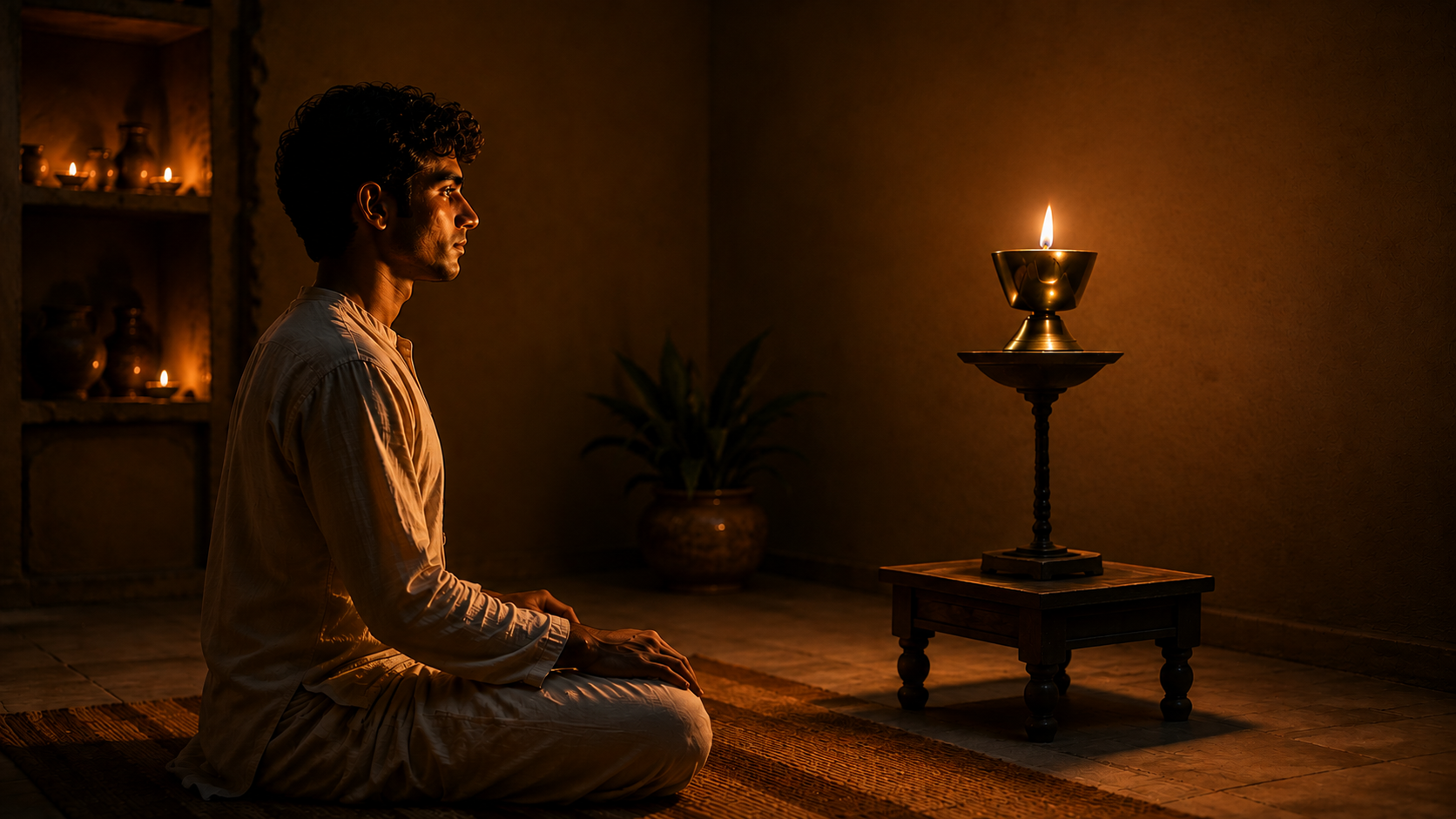


Most people who start meditation hit the same wall in the first week. They sit down, close their eyes, and the mind starts running. Shambhavi sadhna gives the mind something to hold on to. Instead of fighting thoughts, you rest your attention at one point: the space between the eyebrows.
This guide is written for beginners. It explains what shambhavi sadhna is, how to do it step by step, what to expect, and what to avoid. A short FAQ at the end answers the questions people ask most often.
What Is Shambhavi Sadhna?
Shambhavi comes from Shambhu, a name of Lord Shiva. In classical yoga texts such as the Hatha Yoga Pradipika and the Gheranda Samhita, Shambhavi mudra is described as a gesture in which the eyes rest on the point between the eyebrows while the mind turns inward. The texts treat it as a way to reach deep meditative stillness.
Shambhavi Mudra and Shambhavi Sadhna
The mudra is the gesture itself. Sadhna is the steady, daily practice of it. Doing the gesture once is an experiment. Doing it every morning with patience is shambhavi sadhna. The difference shows up slowly, over weeks, and that is the point.
Why Beginners Practise Shambhavi Sadhna
In yogic thought, the eyebrow centre is linked to the ajna chakra, the seat of inner vision. You do not have to accept that idea to value the practical side of the practice.
A Fixed Point for the Mind
Wandering thoughts are normal. When attention rests on one spot, you notice the drift sooner and bring the mind back. That small habit of noticing is where awareness begins.
Quiet Without Force
Shambhavi sadhna is gentle. You do not push the eyes or control the breath hard. Many beginners find it easier than counting breaths or repeating long mantras.
What People Report
Regular practitioners often describe a calmer mind, better focus and a steadier mood. These are personal experiences, not medical claims, and results differ from person to person.
Before You Begin
Place and Time
Choose a quiet corner. Early morning and evening work best. Practise on an empty stomach or at least two to three hours after a meal.
Posture
Sit cross-legged on a mat or on a chair if the floor is hard for you. Keep the spine straight, shoulders loose and hands resting on the knees.
Who Should Be Careful
If you have any eye condition, glaucoma, a recent eye surgery or frequent headaches, speak to your doctor first. If you are unsure about any health issue, ask before you start. Never force the eyes.
How to Do Shambhavi Sadhna: Step by Step
- 1 Settle down. Sit comfortably with a straight spine and relaxed face.
- 2 Breathe. Close your eyes and take five slow, natural breaths.
- 3 Look straight ahead. Open the eyes softly and rest them on a point in front of you.
- 4 Raise the gaze gently. Lift the eyes upward toward the space between the eyebrows. You may not see the point clearly. That is fine. Just direct your attention there.
- 5 Stay relaxed. Keep the jaw loose, the tongue soft and the breath natural.
- 6 Hold briefly. Stay for 20 to 30 seconds in the beginning.
- 7 Rest. Close the eyes, lower the gaze and watch the space between the eyebrows for a minute. Then repeat for three rounds.
If the open-eye version feels tiring, try a gentler one. Keep the eyes closed and turn your attention toward the same point from inside.
Common Difficulties and What to Do
Eye Strain
You are lifting the eyes too high or holding too long. Ease off, shorten the round and rest.
A Wandering Mind
This happens to everyone. When you notice it, return to the eyebrow centre without scolding yourself.
Sleepiness
Your posture may be slumped or the practice may be too late in the day. Sit taller and try a morning session.
Mistakes Beginners Make
- Pushing the eyes upward with force
- Practising for long sessions from the first day
- Expecting lights or visions right away
- Skipping the rest between rounds
- Practising when very tired or sleepy
- Comparing their progress with others
How Long and How Often
Try for five minutes a day. After two or three weeks you can slowly extend to ten or fifteen minutes. A short practice done daily is better than a long one done now and then. Keep the same time and place so your mind learns the routine.
Learn Shambhavi Mahamudra Online
A practice like this is easier to learn with a guide who can correct small mistakes in posture and gaze. Yoga Base teaches meditation sadhnas under the guidance of Yog Guru Shri Ashish Ji, and his courses are available online through registration. You can learn from home, at a calm pace, and get the basics right from the start.
Frequently Asked Questions
What is shambhavi sadhna in simple words?
It is a meditation practice where you rest your gaze and attention on the point between the eyebrows to quiet the mind and build inner awareness.
Can beginners practise shambhavi sadhna at home?
Yes, if there are no eye or health concerns. Start with short rounds, keep the eyes relaxed and stop if you feel strain.
How long should a beginner practise shambhavi sadhna?
Five minutes a day is enough to begin. Increase slowly over a few weeks.
Is shambhavi mudra the same as Tratak?
No. Tratak fixes the gaze on an outside object, like a candle flame. Shambhavi mudra directs the gaze and attention to an inner point at the eyebrow centre. The two practices work well together.
What are the benefits of shambhavi sadhna?
Practitioners report better focus, a calmer mind and steadier moods. These are personal experiences and not a medical treatment.
Can I learn shambhavi sadhna online?
Yes. You can join an online course with Yog Guru Shri Ashish Ji at Yoga Base by registering on the website.
Final Thoughts
Shambhavi sadhna is not complicated. A straight spine, relaxed eyes, a steady point of attention. What it asks for is patience.
Sit for five minutes tomorrow morning. Keep the practice small and honest, and let it grow on its own.