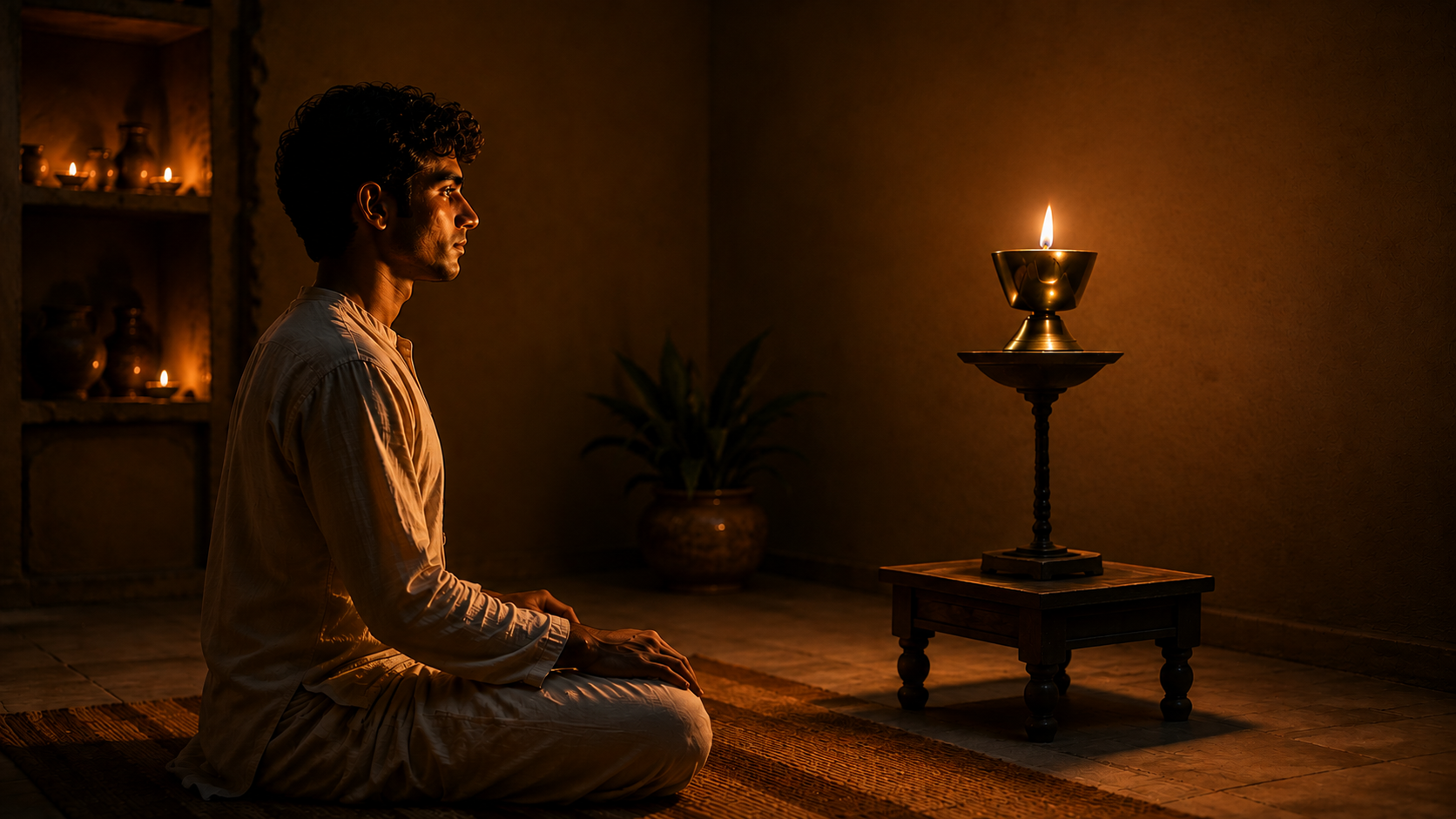

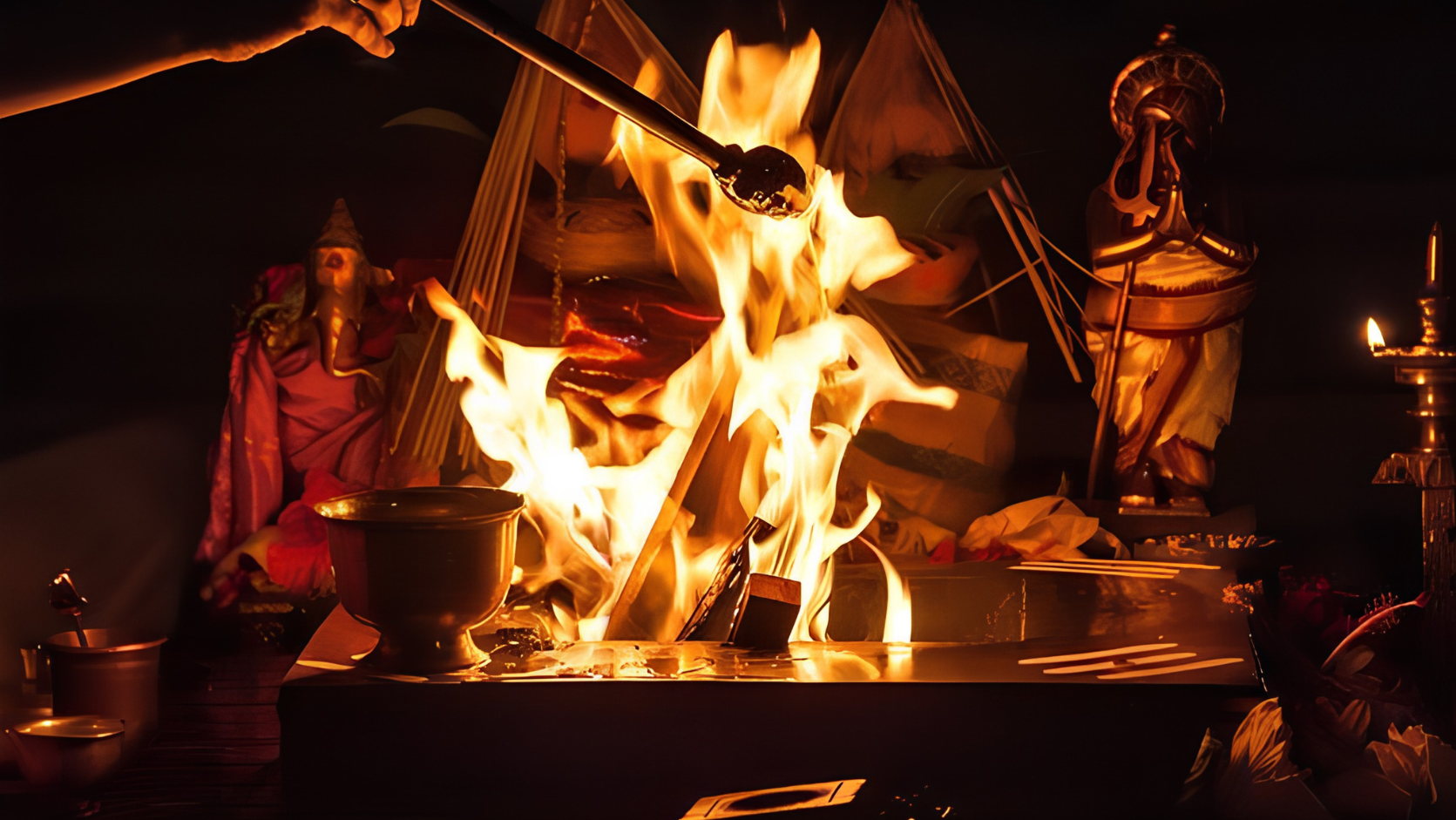
Walk into a home where a hawan has just been done and you notice it before anyone says a word. The air smells of ghee, herbs and burnt wood. The room feels quieter. People speak more softly. Many families have lived with this feeling for generations, and it is the reason hawan has never gone out of use.
This article explains what hawan sadhna is, how it is done, what the materials mean, and why people believe it cleans the mind and the home. If you want to learn it properly, you can also join the online hawan sadhna course by Yog Guru Shri Ashish Ji, which is described near the end.
What Is Hawan?
Hawan, also called havan or homa, is a ritual in which offerings are made into a consecrated fire while mantras are chanted. The word comes from the Sanskrit root hu, which means to offer. It is one of the oldest practices in the Vedic tradition.
The idea is simple. Fire is Agni, and in Vedic understanding Agni is the messenger. Whatever you place in the fire, along with the intention behind it, is carried upward. A person offers something small and physical, and in return asks for clarity, protection or peace.
What Is Hawan Sadhna?
When we say hawan sadhna, we mean something more than a one-time ceremony. Sadhna is steady, disciplined practice. A hawan done once for a housewarming is a ritual. A hawan done with regularity, with attention and with a settled mind, becomes a sadhna. The fire is the same. What changes is the person sitting in front of it.
The Meaning Behind the Materials
Nothing in a hawan is random. Each item has a purpose, and knowing it changes how you perform the ritual.
What Goes Into a Hawan
The Kund
This is the vessel that holds the fire, traditionally a square pit made of copper or clay. The square shape stands for stability and order.
Wood
Mango wood is the usual choice because it burns cleanly and gives a mild, pleasant smoke. Some traditions also use samidha from peepal or palash.
Ghee
Pure cow ghee is poured into the fire with a small ladle called a sruva. It keeps the flame steady and bright. In the symbolic sense, ghee stands for what is refined and sattvic.
Havan Samagri
This is the herbal mixture offered into the fire. It usually contains a blend of dried herbs, roots, seeds, and sometimes sandalwood powder, guggul, or camphor. Each family or teacher may use a slightly different recipe.
Camphor
It is used to light the fire and gives off a sharp, clean fragrance.
Mantras
The Gayatri Mantra is chanted very often. The Mahamrityunjaya Mantra and others are also common depending on the purpose. After each mantra the word swaha is spoken, and an offering goes into the fire.
How a Hawan Is Usually Done
The details vary from one lineage to another, but the outline is similar everywhere.
- Cleanse the space. The area is swept and washed. The person sits on a clean mat, facing east if possible.
- Sit quietly first. Before lighting anything, you take a few minutes to settle your breath. This step is skipped far too often.
- Light the fire. Camphor and a few small pieces of wood are lit in the kund. The fire is allowed to catch properly before any offering goes in.
- Begin the mantras. With each mantra, a small amount of samagri is offered at the word swaha.
- Offer ghee. Ghee is added at intervals through the chanting.
- Close with a final offering. The ritual ends with a last offering, a moment of silence and a short prayer.
- Let the fire finish on its own. It is never put out with water. The ash is collected afterwards with respect.
The whole thing can take twenty minutes or a couple of hours depending on how elaborate it is. For daily practice, a short and sincere hawan is better than a long one done in a rush.
How Hawan Works on the Mind
Hawan is not only about the fire. It is about what the person is doing while sitting beside it.
You sit still. You focus your eyes on one flame. You repeat a mantra in a steady rhythm. Your hands are busy with a simple, repeated action. There is almost no room left for the usual mental noise.
This is close to what meditation traditions call dharana, holding the attention on a single point. If you have practiced Tratak, where the gaze rests on a candle flame, you already know how the mind reacts. It slows down. Thoughts still arrive, but they lose their grip.
The chanting adds another layer. Repeating a mantra aloud tends to lengthen the breath and steady the pulse. Many people feel calmer within a few minutes, even if they could not explain why.
There is also the matter of intention. A hawan is done for something: peace in the family, release from a heavy mood, gratitude, a fresh start. Naming that intention before you begin gives the mind a direction. Over time, people who practice regularly say they get better at noticing their own restlessness and letting it go, because the habit of sitting with the fire teaches them how.
How Hawan Is Believed to Purify the Home
In the traditional view, a home carries the mood of the people living in it. Arguments, grief, illness, a long stretch of stress, all of it is said to settle into a space. Hawan is performed to clear that.
Several things are said to happen. The smoke of herbs and ghee is believed to cleanse the air. The sound of the mantras is believed to bring a calm, orderly vibration into the rooms. And the act of the whole family gathering around the fire brings people together in a way daily life often does not.
It is worth being honest here. Some small studies have looked at herbal smoke and air quality, and the results are limited and mixed. Hawan should not be treated as a medical treatment or a replacement for ventilation and proper hygiene. What people consistently report is a change in the feeling of the home, a sense of lightness and calm that lasts for hours or days.
Ventilation and Safety
Keep a window or door slightly open so the smoke can move out, and sit with enough space around you. People with asthma or breathing problems should be careful with smoke and speak to a doctor first.
When to Do Hawan
Traditionally, hawan is done at sunrise or sunset, when the day is changing. Common occasions include:
- Moving into a new home
- Festivals such as Navratri, Diwali and Mahashivratri
- Birthdays and anniversaries
- After illness, loss or a difficult period
- The start of a new venture or a new year
- As a regular weekly or daily practice
You do not need a special occasion.
Common Mistakes to Avoid
Rushing
If you are checking the time through the whole ritual, the point is lost.
Chanting Without Understanding
Learn what the mantra means, or at least how to pronounce it properly. A teacher helps a great deal here.
Using Poor Materials
Artificial incense, plastic items or impure ghee do not belong in a hawan.
Treating It as a Show
It is a personal practice first. The sincerity of the person matters more than the size of the setup.
Ignoring the Preparation
A clean space, a quiet mind and a clear intention are half of the work.
Learn Hawan Sadhna Online: The Online Hawan Sadhna Course
Why Guidance Matters
Hawan looks simple, but doing it properly takes guidance. The pronunciation of the mantras, the order of the offerings, the right materials and the right state of mind are all things best learned from someone who has practiced for years.
About the Online Hawan Sadhna Course by Yog Guru Shri Ashish Ji
Yoga Base offers an online hawan sadhna course taught by Yog Guru Shri Ashish Ji. You register online and learn from home, so you do not need to travel or arrange a priest every time. The online hawan sadhna course by Yog Guru Shri Ashish Ji takes you through the practice step by step, so you can understand it properly and bring the sacred fire into your own home with confidence.
Final Thoughts
Hawan sadhna is one of the plainest and oldest ways to sit with yourself. A small fire, a few offerings, a mantra repeated with attention. There is nothing complicated in it, and that is why it has lasted.
If your home feels heavy, or your mind will not settle, try it once with care. Sit down, light the fire, and give it your full attention for twenty minutes. Then notice how the room, and you, feel afterwards.